Digital sovereignty is a question of architecture
A time tracker needs a database. But does it need a new cloud for that? From a developer's perspective, building a whole new system from scratch is genuinely tempting, your own user management, authentication, data storage, interfaces. All of it is feasible. But just because you can build something doesn't mean you should.
Why Nextcloud instead of our own system
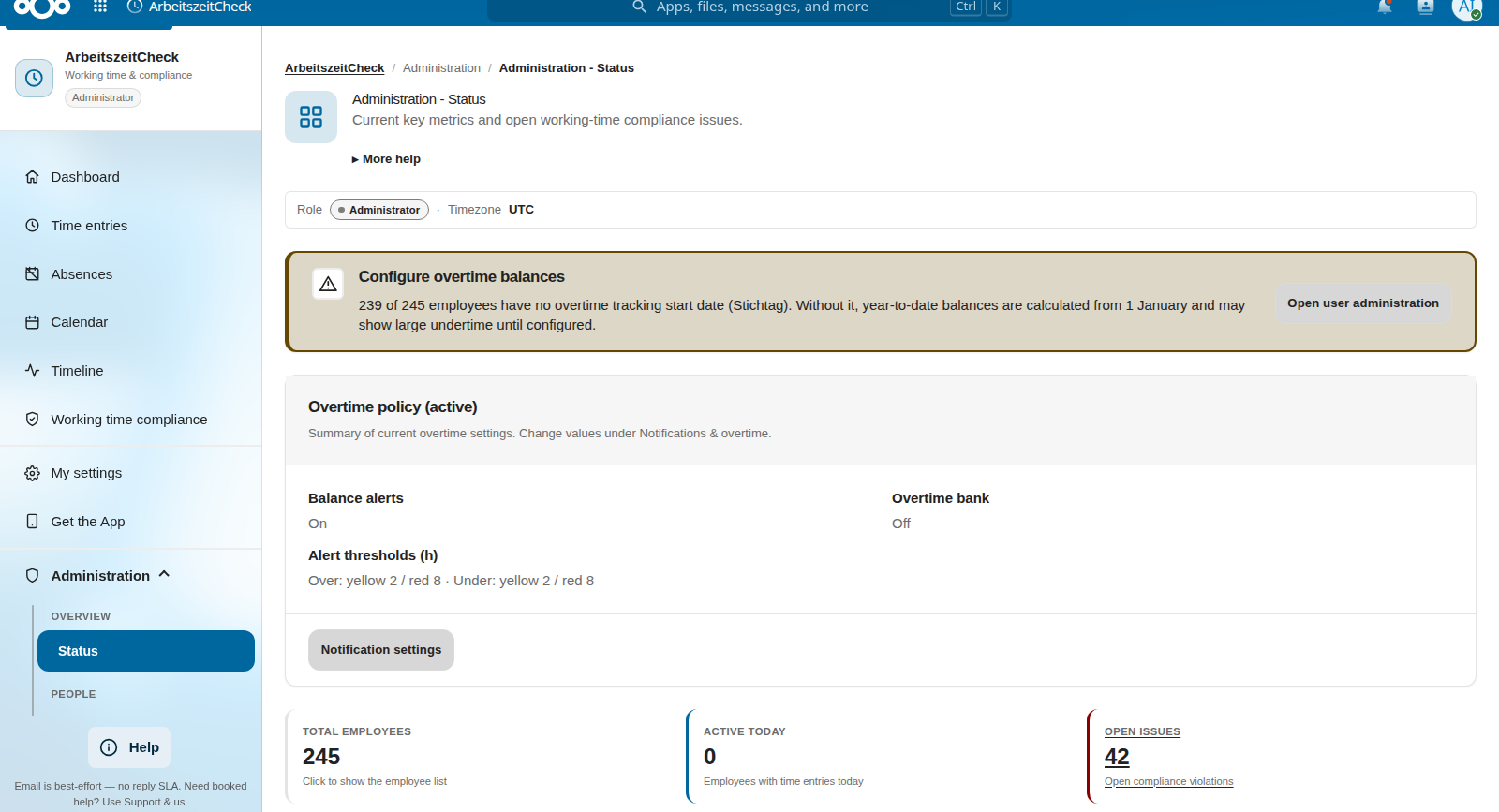
When we built ArbeitszeitCheck, we chose to develop it directly as a Nextcloud app. That means using the existing infrastructure rather than erecting a second one next to it. Users and groups are managed by Nextcloud. The working-time data stays on the organisation's server. And the existing IT administration keeps control.
Especially for sensitive data like working hours, sick reports and absences, I think that matters. A time tracker knows when people work, when they're ill and when they're off, that is not information that should accumulate at yet another vendor.
The constraint that is a strength
Developing inside an existing system naturally brings technical challenges. You have to respect its architecture, its interfaces and its permission model. But that is also where the advantage lies: you don't rebuild everything, you extend an existing ecosystem. Login, backup, user administration, Nextcloud solved those long ago, at a level a small team could never reach alone.
For me, digital sovereignty is not an extra feature you bolt onto the marketing. It is a consequence of how the system is built, or it doesn't exist.
ArbeitszeitCheck is AGPL-3.0-or-later and installs directly into your own Nextcloud instance.